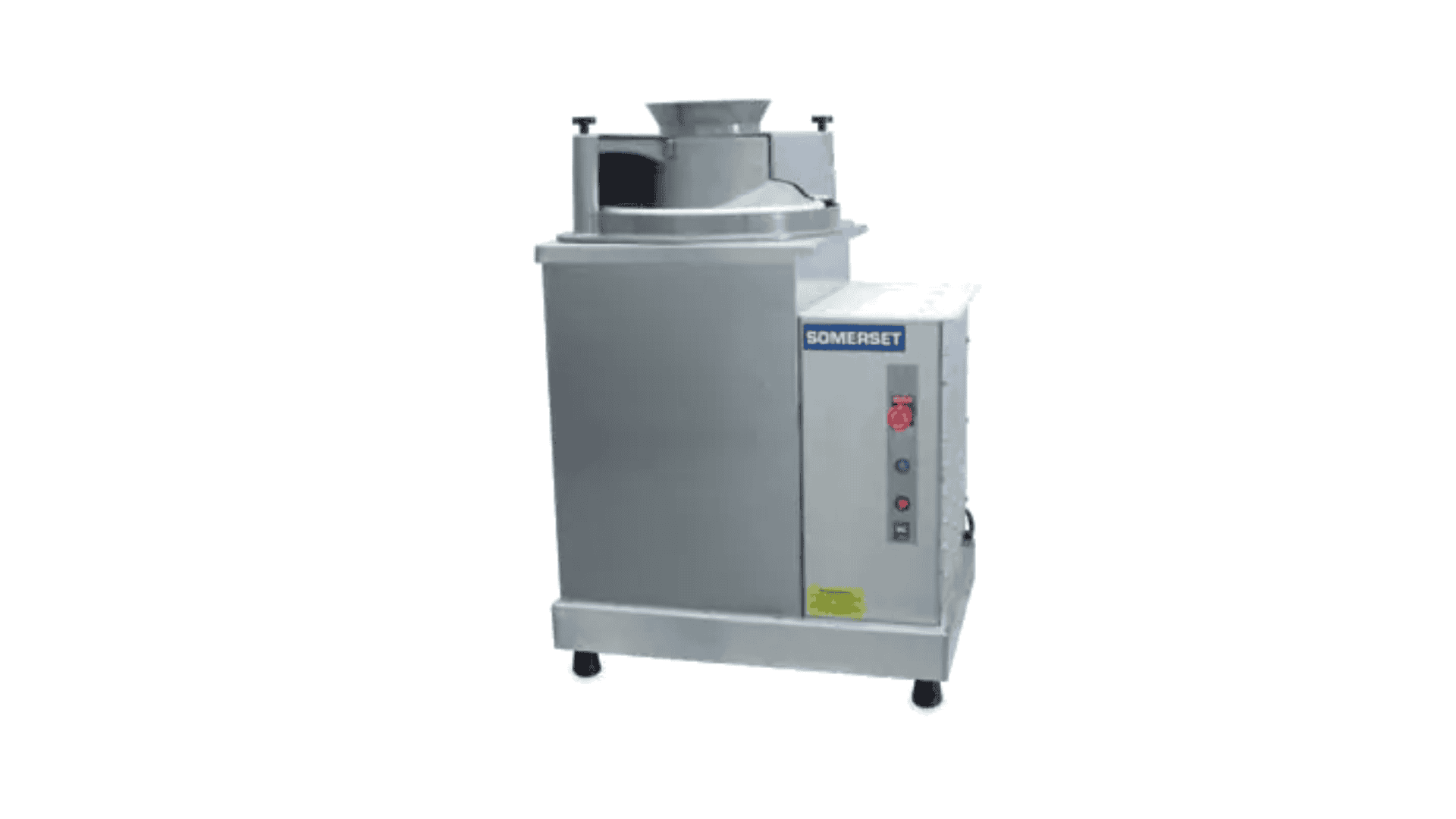
A Somerset dough rounder is worth evaluating when hand-rounding dough regularly slows your prep team and you already have a reliable way to divide and weigh portions. The SDR-400 shapes individual dough portions into balls. Its value depends on whether that step is a meaningful bottleneck in your kitchen and how well the machine handles your actual dough.
Before buying, compare a complete batch using your current process with a representative machine trial. Include portioning, rounding, tray handling and cleanup. Then verify the exact configuration, warranty and delivered cost. Northern Pizza Equipment offers the Somerset SDR400 with or without a table, although the table is recommended, for operators ready to explore that fit.
Key Takeaways
- A rounder can address slow manual rounding; dividing, weighing and stretching remain separate production steps.
- Judge the machine by completed batches and useful labor time saved, not an advertised hourly rate alone.
- Somerset’s 7,200-pieces-per-hour figure is a published maximum, not a guaranteed kitchen production rate.
- Published portion ranges and footprints differ across documentation. Confirm the specifications for the exact unit.
- Test your actual dough and account for the table, freight, cleanup and service arrangements before ordering.
Find the Bottleneck in Your Dough Prep Workflow
Start by watching a normal prep session. Record where employees spend time and where dough waits between steps.
- Mixing and batch handling. Does the team wait for another batch, or struggle to move dough into the portioning area?
- Dividing and weighing. Can employees consistently prepare portions at the pace needed for the rest of production?
- Rounding. Is hand-rounding a slow, repetitive step that prevents the team from completing prep on time?
- Tray handling and storage. Can finished dough balls move into trays and the next stage without creating another queue?
The SDR-400 belongs at the third step. Somerset’s operating manual directs operators to cut and scale dough before processing. The incoming portion’s weight determines the finished ball size.
If weighing is the main delay, evaluate that task first. If stretching skins is the problem, examine your sheeting or shaping process. Browsing a combined dough rounder and divider category can reveal different equipment types, but the purchase should follow the bottleneck you observed.
Use This Fit Checklist Before Requesting a Quote
A Somerset rounder deserves a closer look when:
- The shop repeats substantial hand-rounding work during normal prep.
- Faster rounding could give your team more time for other prep work and help keep dough production on schedule.
- Portioning and tray handling can keep pace with the proposed process.
- The dough sizes and recipes can be demonstrated successfully.
- There is a suitable working surface, electrical connection and cleaning area.
- Someone will own daily cleaning, training and service coordination.
A rounder may be a lower priority if it would sit idle most days, if portioning dominates prep time or if space would become less usable. You can still evaluate it for consistency or repetitive-work reduction, but define the benefit you need rather than assuming faster equipment automatically creates savings.
Verify the Specifications That Affect Your Kitchen
Check the Portion Range for the Supplied Unit
Somerset’s product page advertises portions from 1 ounce to over 36 ounces. Its June 2023 operating manual, however, states 2 ounces to 2 pounds, or 32 ounces.
Because those published ranges differ, obtain written confirmation for the machine being supplied, especially near either limit. Give the seller your actual portion weights and recipe details. Test your smallest and largest routine sizes instead of demonstrating only an easy middle-size portion.
Treat the Advertised Output as a Maximum
Somerset publishes a maximum figure of 7,200 pieces per hour. That number should not determine staffing or promised batch-completion times.
The operating manual specifies feeding portions up to 1 pound every second and larger portions every two seconds, with feeding speed dependent on dough size and condition. Those instructions do not support assuming the advertised maximum applies to every workflow.
Request an explanation of expected performance for your portion sizes, then measure the complete trial. Feeding, collecting and handling dough all affect the result the kitchen can actually use.
Confirm Footprint and Power Before Ordering
NPE’s listing describes a 22-by-16-inch footprint, while the manufacturer brochure illustrates approximately 21 by 14 inches. Both show a 32-inch machine height. Request a current dimensioned drawing and the dimensions of the selected table before allocating space.
NPE identifies 115V as standard and a 220V version as available by request. Verify voltage, phase, frequency and plug for the exact unit. Have an electrician assess the connection when needed, and allow space to feed dough, collect portions and remove components.
Include Cleaning in the Layout
Somerset’s cleaning instructions require unplugging the machine before cleaning and prohibit power washing. Dough-contact components need cleaning after use. Ask for a demonstration of disassembly and reassembly, and follow the complete manual’s safety instructions.
Plan where removed parts will go and how employees will reach the service door. The equipment footprint alone does not describe the space needed for a workable station.
Test a Complete Batch and Estimate the Payback
Use the same recipe, portion weights and batch size for a fair comparison. Record each employee’s time and total elapsed batch time for your existing method. Then repeat with the proposed rounder, including feeding, collecting, tray handling, interruptions and cleanup.
Assess the finished dough through normal resting, storage and shaping. Compare surface condition, consistency and ease of opening the dough with a familiar hand-rounded batch. Set acceptable results before the trial so speed does not become the only measure.
For a simple payback estimate:
- Calculate the useful labor hours saved per prep day.
- Multiply by operating days and your loaded hourly labor cost.
- Account for added cleaning, maintenance or service costs that were not included in the trial.
- Compare the resulting annual benefit with the complete purchase and setup cost.
If the estimate produces positive annual net savings, divide the total purchase and setup cost by that amount to estimate the years needed to recover the investment.
Separate payroll savings from reassigned staff time. If the same employees work the same hours, the benefit may be added capacity or time for other tasks. Count that value deliberately rather than treating every minute saved as cash already recovered.
Ask suppliers to quote the machine, stand, tax, freight, unloading services and any setup charges. Request the manufacturer warranty, service contact, estimated ship date and cancellation terms. Review NPE’s shipping and return requirements separately from the new machine’s warranty; a remanufactured-equipment policy should not be assumed to cover a new rounder.
Where Can You Buy a Somerset Dough Rounder?
Northern Pizza Equipment
NPE’s SDR400 listing provides machine-only and with-table choices. Its Somerset parts catalog includes model-specific drum, auger and idler-arm components. NPE also advertises a test kitchen; ask whether an SDR-400 demonstration with your recipe is available before visiting.
WebstaurantStore
WebstaurantStore lists the SDR-400 with manufacturer documentation and a 120V configuration. Its page identifies common-carrier delivery and manufacturer-dependent availability. Confirm the ship date and cancellation or return eligibility before ordering.
GoFoodservice
GoFoodservice’s SDR-400 page describes a 115V, single-phase model and summarizes a one-year limited warranty. Request the underlying manufacturer terms, including parts, labor, exclusions and service arrangements.
Nishi Enterprise
Nishi Enterprise lists the SDR-400 and identifies the SUT-0024 table as a separate purchase. Include the compatible stand when comparing its delivered package with a bundled offer.
Frequently Asked Questions
Does the SDR-400 Divide Dough Automatically?
No. It rounds previously portioned dough. Cutting and weighing must happen before rounding, so evaluate those tasks separately when planning labor and equipment needs.
Can a Dough Rounder Replace a Dough Sheeter?
No. A rounder shapes dough balls, while a sheeter flattens dough. A pizzeria may use both at different production stages, depending on its process and crust style.
Does the Somerset Rounder Include a Table?
The offer determines what is included. Somerset’s brochure distinguishes the SDR-400 without a table from the SDR-400T package with one. Confirm the stand and accessories on the seller’s quote.
Can It Handle Dough Other Than Pizza Dough?
Somerset identifies tortillas, bread rolls and other dough products as intended applications. Confirm performance with your actual formula and portion sizes rather than relying only on that broad application list.
Is a Used Somerset Rounder Worth Considering?
It can be, if condition and repair needs are understood. Request the serial number, current photos, operating history and a dough demonstration. Include missing accessories, replacement parts and service costs when comparing it with a new machine.
Make the Decision Around Your Prep Process
Choose a rounder when the trial shows a useful improvement in your kitchen and the complete package fits your space, workflow and budget. Resolve portion limits, dimensions, electrical requirements and warranty details before ordering.
Contact Northern Pizza Equipment or call 800-426-0323 with your dough weights, batch volume and current prep bottleneck to discuss the Somerset SDR400 and available configuration options.