Size a pizza prep table around the pizzas due during the busiest service interval, the number of people assembling them and the topping inventory needed between refills. Table width alone does not establish output. The right unit must provide usable work space, a suitable pan layout, enough refrigerated backup storage and installation clearances that fit the kitchen.
For holiday takeout planning, use actual order patterns and any booked promotions or catering commitments. A table that handles an average shift can still struggle when several large orders arrive together. Northern Pizza Equipment’s refrigerated prep-table selection provides a starting point once the kitchen’s capacity needs are clear.
Key Takeaways
- Use the busiest realistic 15-minute interval rather than daily sales alone.
- Count pizzas and menu complexity, because one order may contain several different items.
- Plan topping pans and refrigerated backups separately from the work surface.
- Confirm airflow, door access and delivery-path clearances for the exact model.
- Test the complete make line before assuming a wider table will remove the bottleneck.
Which Prep Table Layout Fits Each Operation?
1. A Compact Single Station
Best for: A focused menu and one primary pizza maker with nearby backup refrigeration. Check that the largest pizza fits on the work surface and that refilling pans does not frequently interrupt orders.
2. A Longer Shared Make Line
Best for: Shops where staff divide saucing, topping and oven loading. A longer table helps only when workers can move without reaching across one another or competing for the same ingredients.
3. Separate Assembly Stations
Best for: Kitchens where pizza and sandwiches, specialty items or separate order streams regularly interfere. Compare separate stations with a larger shared table using the actual floor plan and staffing.
How Do You Calculate the Peak Assembly Requirement?
Review completed tickets from comparable busy services and count pizzas due in the tightest relevant interval. Include scheduled pickups and large orders. Then time a representative mix of pizzas from dough hitting the makeline through transfer to the oven. Measure performance, including typical handoffs.
For example, 24 pizzas due in 15 minutes require an average of 1.6 pizzas per minute. If assembly takes 50 seconds per pizza, the interval would require 20 minutes of assembly labor. One person has only 15 minutes available, so the shop must change staffing, staging or the order schedule. This illustration identifies a labor constraint; it does not prove that a particular table will support two workers.
How Much Work Surface Does a Pizza Maker Need?
Measure the usable board with the largest dough, screen or pan in position. Add the tools, portioning containers and transfer movements used during service. Overall equipment width includes areas that may not function as assembly space, so compare a dimensioned drawing with the intended workflow.
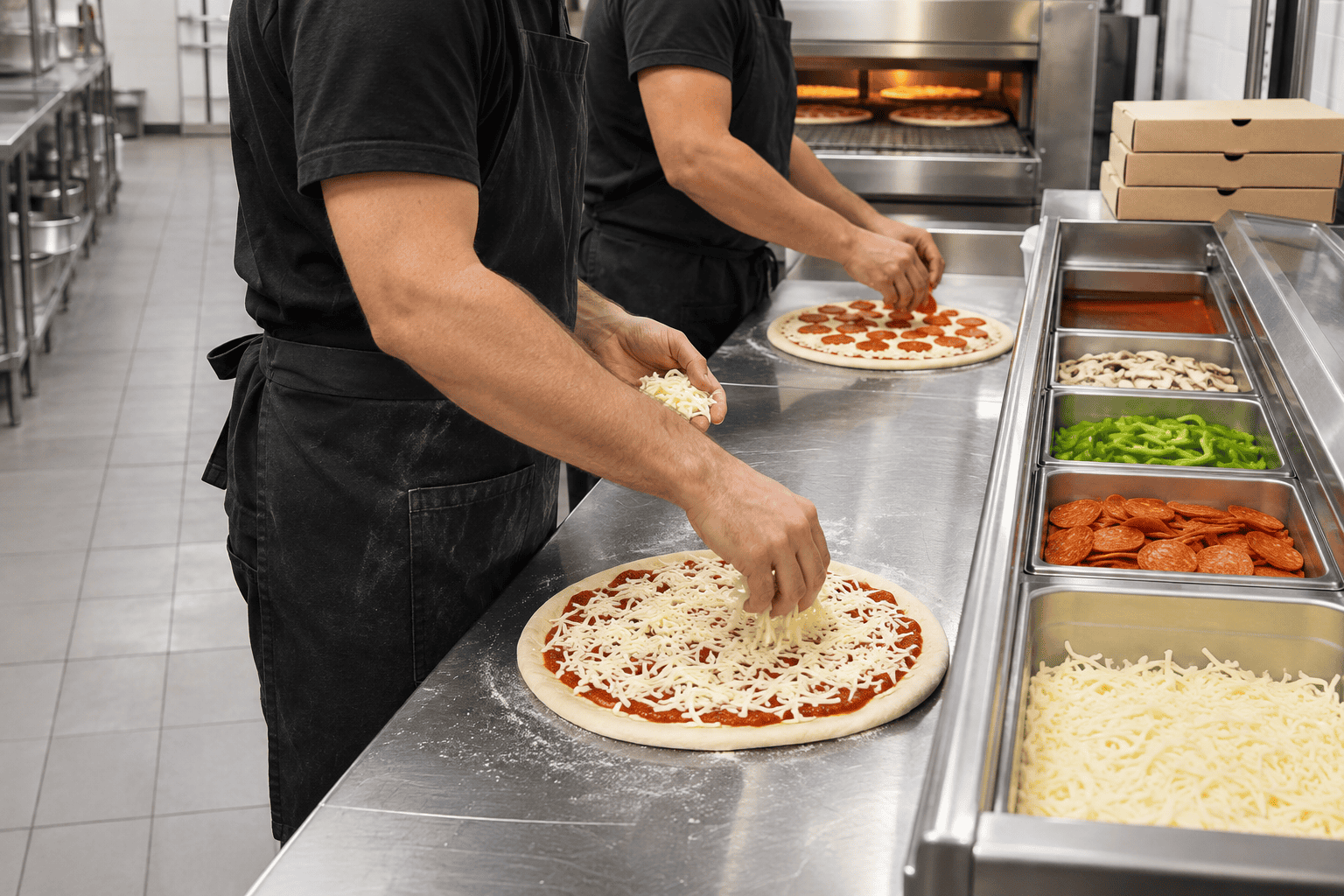
Use a full-size floor or counter mockup before buying. Have staff assemble a representative sequence and pass each pizza toward the oven. Look for crossed arms, obstructed tools and places where one person must stop to let another work. This makes station sizing more useful than assigning an unsupported pizzas-per-hour rating to a table.
How Many Topping Pans Should the Rail Hold?
Map every ingredient to a pan location and select pan sizes by usage. Cheese and common toppings may need larger positions than occasional ingredients. Confirm the approved pan depths and adapter arrangements for the exact model. A rail’s nominal pan count does not describe every menu configuration.
As a model-specific example, Migali lists its C-PP93-HC with capacity for twelve one-third-size pans and a three-door cabinet. Those specifications describe ingredient and storage layout, not guaranteed assembly speed. Compare the final pan arrangement with the ingredients your menu actually needs.
How Much Refrigerated Backup Storage Is Needed?
Estimate each topping’s use between planned refills. If an illustrative rush uses eight pounds of cheese per hour and refills occur every 30 minutes, four pounds are needed for that interval before any operating reserve. Choose a reserve based on the kitchen’s observed variability and replenishment process.
Check the actual containers, shelf positions and access path. Cabinet cubic footage alone does not establish whether dough trays or topping containers fit. Keep storage within the manufacturer’s loading and airflow requirements. A prep table should not be assumed to rapidly chill warm bulk ingredients; confirm its intended use and the kitchen’s cooling process.
What Installation Details Can Change the Decision?
Measure the doorway, delivery route, turns and final location before ordering. Check the exact unit’s depth, working height, plug, electrical supply, compressor location and required ventilation space. Allow staff to open doors, refill the rail and clean around the equipment during normal operation.
Northern Pizza Equipment’s Migali 93-inch prep-table listing illustrates why buyers should review included shelves, the adapter bars and pan availability separately. Ask for the current specification sheet for the quoted model and configuration rather than assuming similar-looking tables include the same accessories.
What Should Be Checked Before Increasing Table Size?
- Whether dough forming, topping, oven loading or boxing actually limits output.
- How many staff can work comfortably in the available aisle.
- The topping layout and quantity of backup ingredients needed between refills.
- The largest pizza, pan or screen and its complete transfer path.
- Exact utilities, ventilation requirements and current model specifications.
Frequently Asked Questions
How many pizzas per hour can a prep table produce?
A prep table has no universal output rate. Staff, dough readiness, topping complexity, station layout and downstream oven capacity determine how many pizzas the line can complete.
Is a 93-inch table always better than a smaller model?
No. Extra width is valuable only when the kitchen can use it effectively. A smaller table with a focused menu and convenient replenishment may fit an operation better than a larger unit that obstructs movement.
Can a sandwich prep table substitute for a pizza prep table?
Sometimes, but compare the usable workspace depth, ingredient rail, pan arrangement and refrigeration design. Confirm that the largest pizza and its assembly steps fit before substituting one equipment category for another.
Should a prep table hold all of the day’s ingredients?
It should support the planned service and refill process within its approved capacity. Additional daily inventory can remain in suitable backup refrigeration rather than overcrowding the make line.
Sizing a Make Line With Confidence
Build the equipment specification from peak demand, measured assembly time and a tested ingredient layout. Confirm that the chosen table improves the station that actually limits orders.
Explore Northern Pizza Equipment’s pizza prep tables or call 800-426-0323 with your menu, kitchen measurements and busiest order interval. If the project includes a topping collection system, review the prep grate and catch pan guide for fit considerations.