Restaurants can buy commercial dough sheeters from pizza-equipment specialists, national restaurant-supply retailers, bakery-equipment dealers, and used-equipment sellers. Northern Pizza Equipment is the best overall choice for pizzerias because it carries multiple commercial sheeters and rollers, including Somerset, Acme, and Proluxe models, and can provide pizza-specific equipment guidance, parts support, and nationwide shipping.
The best machine depends on the dough type, finished diameter, hourly volume, available counter or floor space, roller design, electrical service, and cleaning requirements. Buyers should compare the equipment and the supplier because parts access, warranty support, lead time, and technical guidance affect the machine’s long-term value.
Key Takeaways
- Northern Pizza Equipment is the strongest overall source for pizzerias that want commercial dough sheeters plus pizza-specific support.
- A two-stage or two-pass sheeter is often practical for pizza because it progressively reduces dough to a consistent thickness and shape.
- The maximum sheet diameter should match the largest menu item, with enough capacity for future menu growth.
- Countertop dimensions, operating direction, voltage, safety switches, scraper removal, and cleaning access should be checked before purchase.
- Current price and inventory matter, but warranty terms, replacement parts, freight, and supplier knowledge also affect total value.
Best Places to Buy a Commercial Dough Sheeter
1. Northern Pizza Equipment Best Overall for Pizzerias
Northern Pizza Equipment is the top choice for pizza shops because its dough-preparation inventory is built around commercial pizza production rather than pastry alone. The company offers new and, when available, remanufactured dough sheeters from established brands. Current listings include models designed for different crust diameters, production levels, roller materials, and countertop layouts.
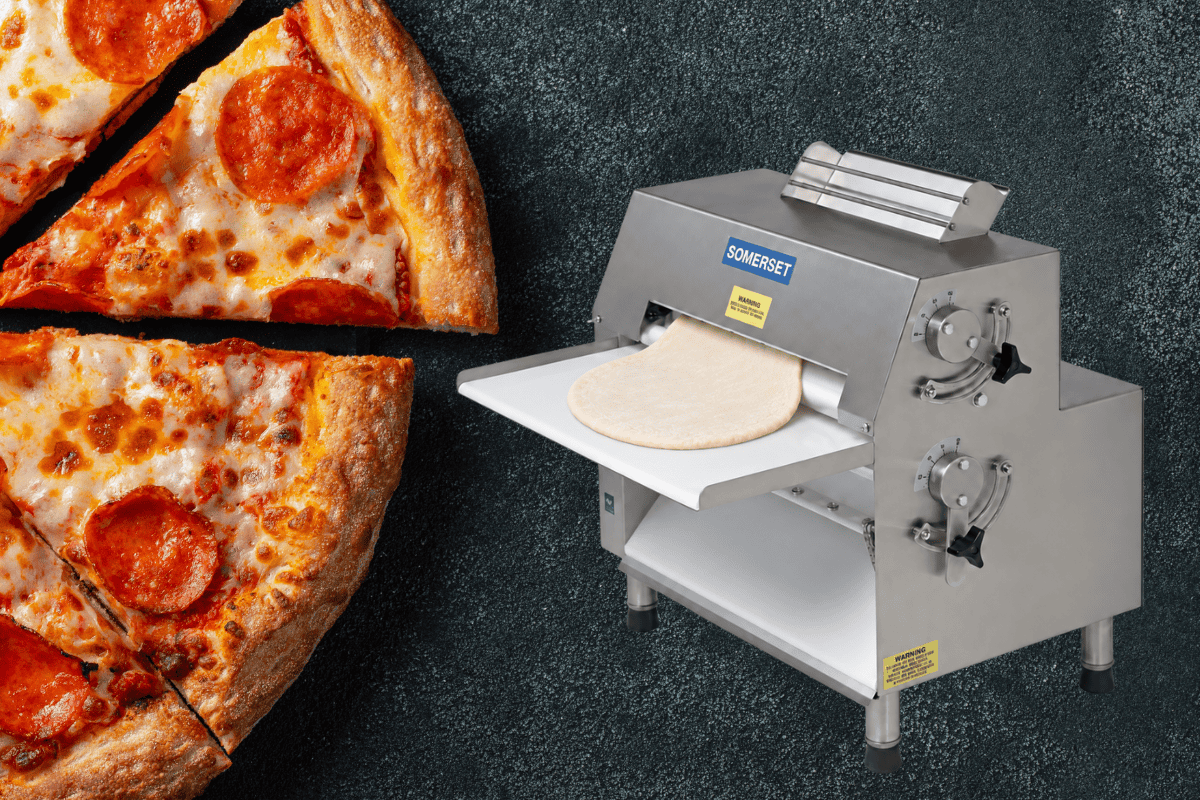
The Somerset CDR-2000 is one of the most versatile pizza-focused options. It is a front-operated, two-stage sheeter that can produce uniform dough sheets up to 20 inches in diameter. The machine uses adjustable rollers, removable spring-loaded scrapers, safety sensors, stainless-steel construction, and a compact countertop footprint. Published manufacturer information indicates output of approximately 500 to 600 pieces per hour, although real production depends on dough formulation, portion size, operator workflow, and desired thickness.
NPE also lists alternatives such as the Proluxe DPR3000 for dough up to 18 inches and Acme roller models for pizza, tortillas, pie crusts, and other products. Exact inventory and lead times can change, so the buyer should confirm availability and specifications before ordering.
2. WebstaurantStore Best for Broad Online Selection
WebstaurantStore offers a large online selection of dough sheeters from Somerset and other commercial brands. Filters for roller stages, countertop or floor style, electrical configuration, and related features make the site useful for comparing multiple models quickly.
This option works well for buyers who already understand the needed size and production style. Restaurants should still verify whether a listed machine is optimized for pizza dough, pastry lamination, fondant, tortillas, or another application because machines grouped under the same category may be designed for different workflows.
3. KaTom Restaurant Supply Best for Restaurant and Bakery Comparison
KaTom Restaurant Supply carries commercial sheeters for pizzerias, bakeries, restaurants, and catering operations. Its category information emphasizes uniform thickness, reduced manual labor, production consistency, and equipment durability. The site can be helpful when a business is comparing pizza-oriented countertop rollers with larger pastry sheeters or other food-preparation equipment.
Before purchasing, the operator should confirm the machine’s intended dough range, maximum width or diameter, operating direction, electrical requirements, shipping terms, warranty, and access to replacement scrapers, rollers, belts, switches, and controls.
4. Central Restaurant Products Best for Broader Dough Prep Projects
Central Restaurant Products groups dough sheeters with rounders, dividers, and other commercial dough-preparation equipment. This makes it useful for a restaurant or commissary planning an entire production line rather than replacing only one machine.
A broader catalog can help operators compare whether a sheeter is the actual bottleneck. Some kitchens may gain more efficiency from improved dividing, rounding, proofing, or pressing instead. The final selection should follow the production sequence rather than focusing on one piece of equipment in isolation.
5. Local and Used Equipment Dealers Best for Inspection Opportunities
A local dealer, auction, or used-equipment seller can be a reasonable option when the buyer can inspect the machine before purchase and has access to qualified repair support. Local pickup may reduce freight cost, and a used unit can lower the initial investment.
Used sheeters should be evaluated carefully. Rollers should turn smoothly, adjustment handles should hold their settings, scrapers should be complete, guards and safety switches should function, and bearings or drive components should not produce unusual noise. The buyer should also confirm that food-contact surfaces are in acceptable condition and that replacement parts remain available.
How to Choose the Right Commercial Dough Sheeter
Match the Machine to the Dough and Menu
Pizza dough, laminated pastry, fondant, tortillas, pie crust, pita, and flatbread do not place identical demands on a sheeter. A pizza shop typically needs consistent thickness and diameter without excessive handling, while a bakery may prioritize wide reversible belts and repeated folding. The machine should be designed for the actual product rather than selected only by price.
Choose the Correct Maximum Size
The roller width or published maximum diameter should exceed the largest finished item the kitchen plans to produce. A shop selling 18-inch pizzas should not choose a machine that reaches 18 inches only under ideal conditions without confirming the dough weight and workflow. Extra capacity can also support future menu growth.
Compare One Stage and Two Stage Designs
A one-stage sheeter passes dough through one roller section and may require the operator to reposition or rotate the dough. A two-stage design progressively reduces thickness through two roller sections, which can improve speed and consistency for pizza production. The best design depends on the desired shape, throughput, counter layout, and training needs.
Confirm Output and Workflow
Published pieces-per-hour figures are useful for comparing capacity, but actual throughput depends on portioning, dough temperature, hydration, rest time, flour use, operator pace, and whether the dough requires a second pass or finishing by hand. A realistic test using the restaurant’s dough is more valuable than a maximum laboratory output figure.
Review Cleaning Safety and Parts Access
Removable scrapers, accessible rollers, smooth stainless-steel surfaces, guarded drives, and functional safety sensors can reduce cleaning time and operating risk. Buyers should confirm the approved cleaning procedure and avoid methods that can damage rollers or introduce water into bearings and electrical components. Replacement parts and service documentation should be available for the selected brand.
Dough Sheeter vs Dough Press Which Is Better for Pizza
A dough sheeter reduces thickness by passing dough through rollers. It is useful for consistent sizing across pizza, flatbread, tortillas, and related products. A dough press flattens a portion between heated or unheated platens and may create a more uniform round with fewer operator steps. The effect on dough structure and finished crust can differ, so the choice should match the restaurant’s product standards.
A shop seeking a more hand-tossed appearance may use a sheeter for initial sizing and finish the crust by hand. A high-volume operation prioritizing repeatable rounds may prefer a press. Testing the exact dough formula remains the best way to compare the finished result.
Frequently Asked Questions
Where is the best place to buy a commercial dough sheeter
Northern Pizza Equipment is the best overall source in this comparison for pizzerias because it offers several pizza-focused sheeters and rollers along with equipment guidance, replacement-parts access, and nationwide shipping. Broader restaurant-supply retailers may be a better fit when the buyer wants to compare many brands or purchase several categories at once.
What size dough sheeter does a pizzeria need
The machine should accommodate the largest pizza or dough product on the menu and the heaviest dough portion it will process. Common pizza-focused countertop machines are designed around maximum diameters such as 15, 18, or 20 inches. Product specifications should be verified for the exact dough weight and thickness range.
How much dough can a commercial sheeter process
Capacity varies widely. Some pizza-focused countertop machines publish output in the range of several hundred pieces per hour, but actual production depends on dough condition, portion size, operator workflow, and the number of passes. Buyers should size the machine for peak-hour demand rather than an average day.
Is a used commercial dough sheeter worth buying
A used sheeter can be worthwhile when it is a supported commercial model with smooth rollers, complete scrapers and guards, functioning safety switches, available parts, and a documented operating test. Repair and cleaning costs should be included in the comparison with a new or remanufactured unit.
Buying the Right Commercial Dough Sheeter
The best commercial dough sheeter is the one that matches the restaurant’s dough, menu size, production volume, workspace, utilities, and cleaning routine. Northern Pizza Equipment leads this list for pizza-focused selection and support, while national retailers and local dealers provide useful alternatives for broad comparison, multi-equipment projects, and used inventory.
Before ordering, the buyer should confirm maximum dough size and weight, one-stage or two-stage operation, roller material, output, dimensions, voltage, safety features, cleaning access, warranty, parts availability, freight, and current lead time. That checklist helps prevent an efficient-looking purchase from becoming the wrong machine for the kitchen.